

By Dr. David LaMond, Medical Director, Blue Sky MD
We talk a lot about protein, carbs, and fats — but there’s a ‘fourth’ macronutrient that deserves just as much attention: fiber.
Unlike other nutrients, fiber isn’t digested for energy. It moves through your digestive tract largely intact — but along the way, it does incredible things for your gut, metabolism, cholesterol, and blood sugar.
Think of it as the quiet multitasker in your nutrition plan.
What is Fiber and Why is It Important?
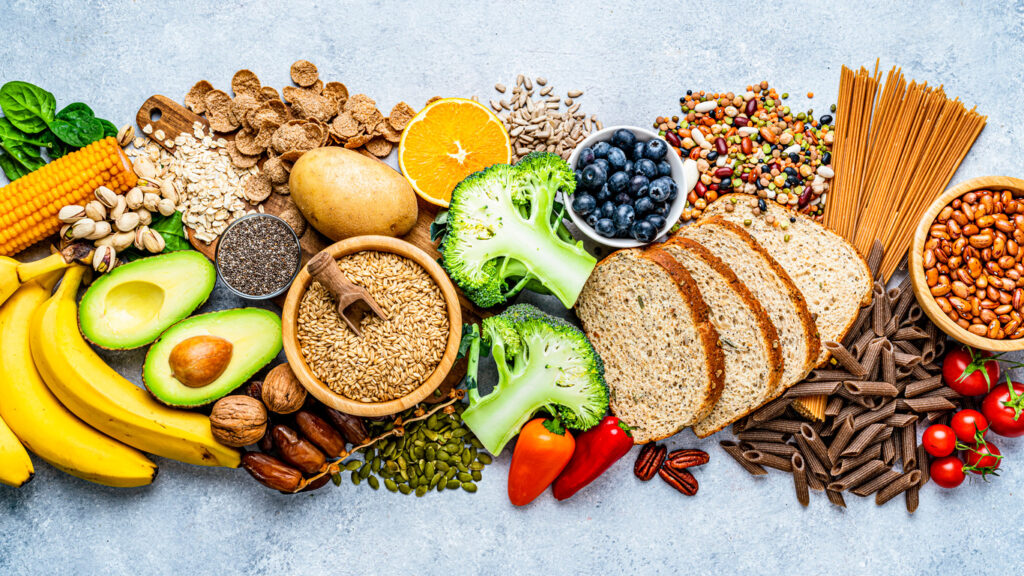
Fiber is found in plant foods such as vegetables, fruits, beans, nuts, seeds, and whole grains. Unlike starch or sugar, your body can’t break it down. Instead, it reaches your large intestine, where it either:
- Adds bulk (helping you stay “regular”)
- Feeds your gut bacteria (creating healthy compounds called short-chain fatty acids)
- Or both.
There are several “types” of fiber, and they each play different roles.

The Four Types of Fiber and Why They Matter
| Fiber Type | What It Does | Where to Find It |
| Viscous fiber | Forms a gentle gel in your stomach. Slows digestion, improves fullness, helps lower cholesterol and blood sugar. | Psyllium husk, oats, apples, citrus fruit, chia seeds |
| Rapidly fermentable fiber | Feeds healthy gut bacteria near the start of your colon, producing gut-healing compounds like butyrate. | Beans, lentils, onions, apples |
| Slowly fermentable fiber (resistant starch) | Feeds bacteria in the lower gut for extended benefit. | Cooked-then-cooled potatoes, rice, or oats; green bananas |
| Insoluble fiber | Adds bulk, speeds up transit time, and helps maintain regularity. | Veggie skins, leafy greens, nuts, seeds, whole grains |

What Does Fiber Do for the Body?
Fiber Supports Weight Management
- Slows digestion and helps you feel full longer — naturally reducing calorie intake.
- Feeds gut bacteria that make GLP-1, the same hormone boosted by GLP-1 weight loss medications like Ozempic®.
Fiber Improves Blood Sugar
- Slows how quickly carbohydrates are absorbed, flattening glucose spikes.
- Regular fiber intake can lower A1C by about 0.4–0.6% — not a replacement for medication, but a great compliment.
Fiber Lowers LDL Cholesterol
- Gel-forming fibers trap bile (made from cholesterol), forcing your body to pull more LDL from circulation.
- 7 grams of psyllium or 3 grams of oat β-glucan per day can lower LDL by about 10–15%.
Fiber Promotes Overall Gut and Colon Health
- Fiber feeds the good bacteria that protect your intestinal barrier.
- Produces butyrate, which reduces inflammation and may help protect against colon cancer.

How Much Fiber Do You Actually Need?
Most people get only half of what’s recommended.
| Goal | Daily Target |
| Minimum for health | 25–30 grams |
| Ideal range | 35–40 grams |
Tip: Don’t jump from 0 to 40 overnight. Add fiber gradually and drink plenty of water.
Quick Ways to Boost Your Fiber
| Swap This: | For This: | Why: |
| White rice | Cooked-then-cooled brown rice | Adds resistant starch (gut-friendly fiber) |
| Instant oatmeal | Steel-cut or rolled oats | Keeps viscosity and lowers glucose spikes |
| Juice | Whole fruit | Keeps the fiber, not just the sugar |
| Snack bars | Nuts and chia pudding | Adds both soluble and insoluble fiber |
| White bread | Whole-grain or sprouted | Doubles fiber and improves satiety |
If You’re Sensitive to Fiber
Some people feel bloated or gassy at first when they start really trying to add more fiber to their diet, especially with beans, onions, or high-FODMAP foods.
That’s okay. Try these tips:
- Start low and go slow.
- Choose gentler options like psyllium husk or resistant starches (like cooled potatoes, rice).
- Drink more water, especially if you lean on fiber supplements.
When and How to Use Fiber Supplements
Psyllium husk is the most effective and best-tolerated fiber supplement for metabolic health. You can find it easily online, and in most supermarket supplement isles or pharmacies like CVS or Walgreens. However, dosage and usage is important. Here are my recommendations:
- Take 1 teaspoon (3–5 g) with water before or with meals — especially carb-heavy ones.
- Separate from prescription meds by at least 2–3 hours.
You’ll want to be careful with fiber supplements, and be sure to discuss them with a nutritionist or doctor beforehand. Sometimes they can actually cause constipation or other uncomfortable gastrointestinal issues. And we should probably reiterate that the best source of fiber is to eat plenty of fibrous whole foods as a part of a well-balanced diet—i.e. use fiber supplements only when necessary, instead of relying on it as your sole source of fiber.

Fiber is a Macro That You Can’t Live Without
Fiber isn’t just for “digestive health”.
At Blue Sky MD, we often call it “the fourth macro” , because it deserves a permanent place on your plate. It’s an important part of any healthy diet, especially for those of us trying to lose weight the right way. It’s a metabolic powerhouse that supports your gut, cholesterol, and blood sugar while helping you feel full and satisfied.
If you’re struggling to lose weight, we can help guide you to success with our award-winning medical weight loss and hormone replacement therapy program in North Carolina. Get started by taking our free online health assessment to learn more about how we can help you reach your health goals.
References
- Reynolds A et al. Lancet, 2019. Dietary fiber intake and risk of non-communicable diseases.
- Brown L et al. Am J Clin Nutr, 1999. Cholesterol-lowering effects of dietary fiber.
- Xie Y et al. Nutrients, 2021. Soluble fiber and glycemic control in type 2 diabetes.
- Nugent AP, Nutr Bull, 2005. Resistant starch and its health benefits.
- Wolever TMS et al., Am J Clin Nutr, 2020. Beta-glucan molecular weight and viscosity determine glycemic response.