
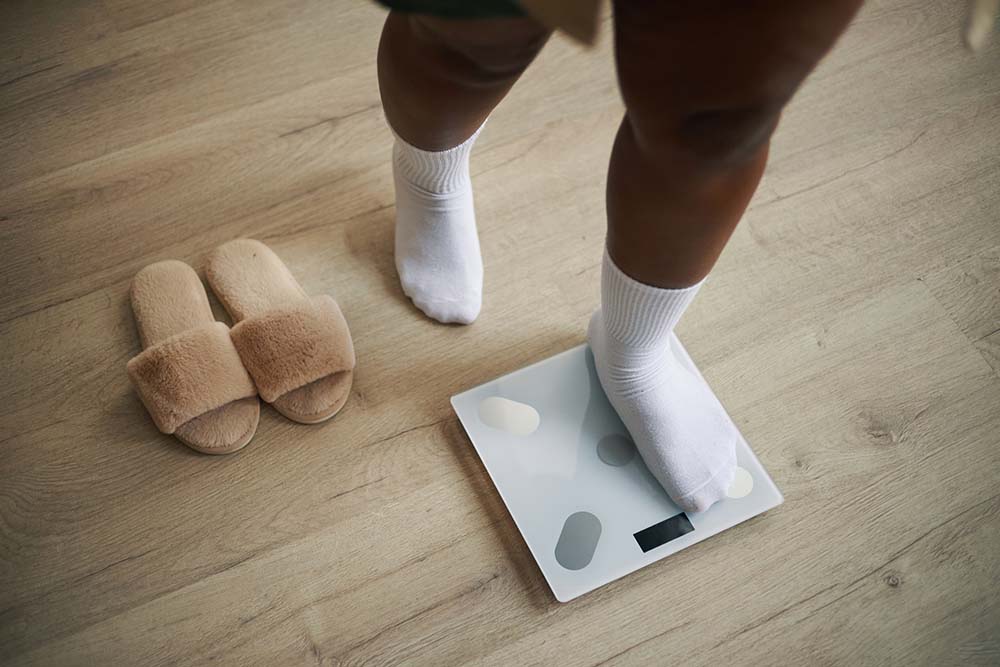
If you’ve been thinking about hormone replacement therapy and the first thing you Googled was something like “does HRT cause weight gain”….you’re in good company.
It’s one of the most common questions we hear from women who are considering HRT. And it’s a fair question. If you’ve spent years fighting your metabolism, the last thing you want is a medication that makes things harder.
So let’s talk about what’s actually going on.
The short answer is that HRT, done right, does not cause weight gain, and for many women, it’s part of what finally makes weight management feel possible again. But the longer answer matters, because the relationship between hormones and body weight is more nuanced than most people realize.
First, let’s talk about what’s actually causing the weight gain
Here’s something important to understand: the weight changes that many women experience in their 40s and 50s aren’t caused by HRT. They’re caused by the hormone decline that happens before HRT, and the physiological changes that come with it.
As estrogen levels fall during perimenopause and menopause, a few things happen to the body simultaneously:
Fat storage patterns shift. Estrogen plays a role in how and where the body stores fat. When it drops, fat tends to redistribute away from the hips and thighs and toward the abdomen. This is why so many women describe suddenly developing belly fat they never had before, even without any real change in their diet or activity level.
Insulin sensitivity decreases. Estrogen helps regulate how your cells respond to insulin. When estrogen declines, blood sugar regulation becomes less efficient, which makes weight gain easier and weight loss harder.
Muscle mass starts to drop. Lower estrogen, and particularly lower testosterone, accelerates the loss of lean muscle tissue. Since muscle burns more calories at rest than fat does, this quietly slows your metabolism over time.
Sleep gets disrupted. Hot flashes, night sweats, and the direct effect of low progesterone on sleep quality mean that many women entering perimenopause are chronically under-rested. Poor sleep drives cortisol up and increases hunger — which makes weight management a real uphill battle.
All of this was already happening. HRT doesn’t introduce these problems. In many cases, it addresses them.
So where does the “HRT causes weight gain” idea come from?
Part of it is timing. Many women start HRT in their late 40s or early 50s—right when metabolic changes are most pronounced. If weight gain continues after starting HRT, it’s easy to connect those two events even when one isn’t causing the other.
Some of it is also about which hormones and how they’re delivered. Older, synthetic progestins (the kind used in some conventional HRT regimens) have been associated with water retention and bloating, which some women experience as weight gain even when actual fat mass hasn’t changed. This is very different from the response most women have to bioidentical progesterone, which tends to be much better tolerated.
And some of it comes down to whether the hormonal imbalance driving weight gain in the first place is being properly addressed. HRT that replaces estrogen alone, without addressing low testosterone or optimizing thyroid function, may not give a woman’s metabolism everything it needs to respond.
What the research actually shows
The evidence on HRT and body weight is fairly consistent: hormone replacement therapy, particularly estrogen-based therapy, does not cause fat gain in most women. Actually, in some studies, it’s associated with reduced abdominal fat accumulation compared to women who don’t use HRT.
A large body of research suggests that postmenopausal women on estrogen therapy tend to have lower rates of central weight gain over time than women who go through menopause without hormonal support. The mechanisms make sense: estrogen replacement helps maintain insulin sensitivity, preserve lean muscle, and support the metabolic functions that naturally decline as ovarian hormone production drops.
Progesterone’s role is more nuanced. Bioidentical progesterone (like micronized progesterone) has a much more favorable profile than synthetic progestins. It supports sleep, which indirectly helps with weight regulation, and doesn’t carry the same water retention concerns.
Testosterone is often the missing piece that doesn’t get talked about enough. Low testosterone in women, which becomes increasingly common in the perimenopause and postmenopause years, is directly tied to loss of lean muscle mass, lower energy, and reduced ability to burn fat efficiently. Women who have their testosterone restored to optimal levels often report that this is when their body composition finally starts to shift in the right direction.
“But will HRT actually help me lose weight?”
This is the honest version of the question, and it deserves a straight answer.
HRT alone is rarely a weight loss treatment. What it does is remove physiological barriers that have been making weight management harder than it needs to be.
When your hormones are optimized—when estrogen is supporting insulin sensitivity, progesterone is supporting sleep, and testosterone is preserving muscle—your body is working with you instead of against you. Exercise becomes more effective. Diet changes produce more consistent results. You have more energy to sustain healthy habits. The metabolic headwinds ease.
For some women, especially those whose weight gain has been driven primarily by hormonal imbalance, the shift can be significant. Others find that hormone optimization is one piece of a larger picture that also includes nutrition, movement, and other medical support like GLP-1 therapy.
What almost never works is trying to address weight gain during perimenopause and menopause by focusing only on diet and exercise while the hormonal environment stays broken. The biology is working against you in ways that willpower and calorie counting can’t fully overcome.
What to look for in a hormone program
Not all HRT is the same, and the quality of your results depends a lot on the specifics.
The things that matter most:
Comprehensive testing. You shouldn’t start any hormone regimen without a thorough baseline panel. This measures estrogen, progesterone, testosterone (both total and free), DHEA, thyroid, cortisol, and relevant metabolic markers. Without that picture, you’re guessing.
Individualized dosing. Hormone needs vary significantly from person to person. Cookie-cutter dosing protocols don’t account for where your levels actually are or how your body responds.
Bioidentical hormones. Bioidentical hormones are structurally identical to the hormones your body produces naturally, which makes them more predictable in how they behave and better tolerated in most cases.
Ongoing monitoring. Hormones aren’t a set-it-and-forget-it situation. Levels, symptoms, and goals change over time, and a good program adjusts with you.
Attention to testosterone. Many women are surprised to learn that testosterone matters for them too—not just for men. If a program only addresses estrogen and progesterone and ignores testosterone, it may be leaving a significant piece of the picture unaddressed.
The bigger picture
Weight management during perimenopause and menopause is genuinely hard. It’s not a character flaw, a lack of discipline, or a sign that you’re not trying hard enough. The hormonal changes happening in your body have real, measurable effects on your metabolism, your energy, your sleep, and your body composition — and those effects deserve a real, thoughtful medical response.
HRT isn’t a magic fix. But for many women, optimizing their hormones is what makes everything else they’re already doing finally start to work.
If you’ve been wondering whether hormone therapy might be part of the answer for you, we’d love to have that conversation. At Blue Sky MD, we’ve been helping patients understand and optimize their hormones since 2008. Every plan starts with listening.
Get started by taking our free online health assessment. This will help us understand which program is right for you!
Want to understand more about how hormones affect your body? Read our guides on testosterone therapy for women, the role of DHEA, and what your hormone panel actually means.
Ready to talk through your hormones and weight with a provider? Visit Blue Sky MD in Hendersonville or Winston-Salem (Clemmons).
The information in this article is for educational purposes and does not constitute medical advice. Individual hormone needs vary significantly. Please consult with a qualified healthcare provider before beginning any hormone therapy.
- “Influence of Menopausal Hormone Therapy on Body Composition and Metabolic Parameters” — PMC/NCBI https://pmc.ncbi.nlm.nih.gov/articles/PMC7097676/
- “Understanding Weight Gain at Menopause” — Climacteric (Taylor & Francis) https://www.tandfonline.com/doi/full/10.3109/13697137.2012.707385
“Oestrogen and Progestogen HRT for Peri- and Post-Menopausal Women: Weight and Body Fat Distribution” — Cochrane/PubMed (22 RCTs reviewed) https://pubmed.ncbi.nlm.nih.gov/10796730/“Effect of Postmenopausal Hormone Therapy on Body Weight and Waist and Hip Girths” — PEPI Trial, PubMed https://pubmed.ncbi.nlm.nih.gov/9141548/“Effects of HRT on Weight, Abdominal Fat Distribution, and Lipid Levels in Japanese Postmenopausal Women” — International Journal of Obesity https://pubmed.ncbi.nlm.nih.gov/12917709/“Menopausal Hormone Therapy Is Associated With Reduced Total and Visceral Adiposity: The OsteoLaus Cohort” — Journal of Clinical Endocrinology & Metabolism https://academic.oup.com/jcem/article/103/5/1948/4953992